Selling a Home in Nevada City, CA: Historic Homes, Cash Offer
Updated November 2026 · Sierra Property Buyers · Nevada County
Need to sell your house fast in Nevada City? Whether you're dealing with foreclosure, an inherited property, or a house that needs repairs — we can help. We buy houses as-is, with no fees, no commissions, and flexible closing timelines.
Before you decide
A cash sale is not the right answer for every property. If your Nevada City home is in sound condition and you can wait for a conventional buyer, listing usually nets more — and we will tell you when that is the case rather than let you find out afterward.
Run both numbers yourself →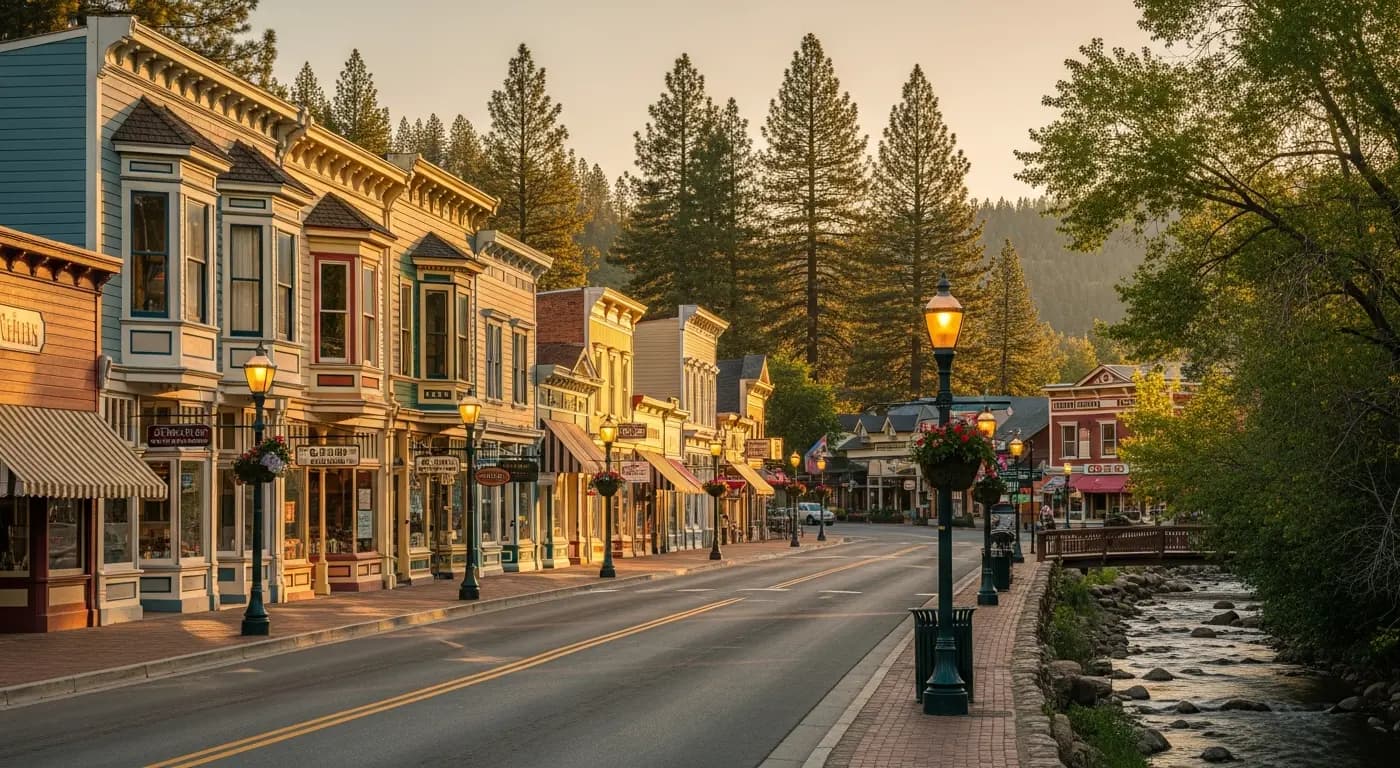
Who buys houses for cash in Nevada City, CA?
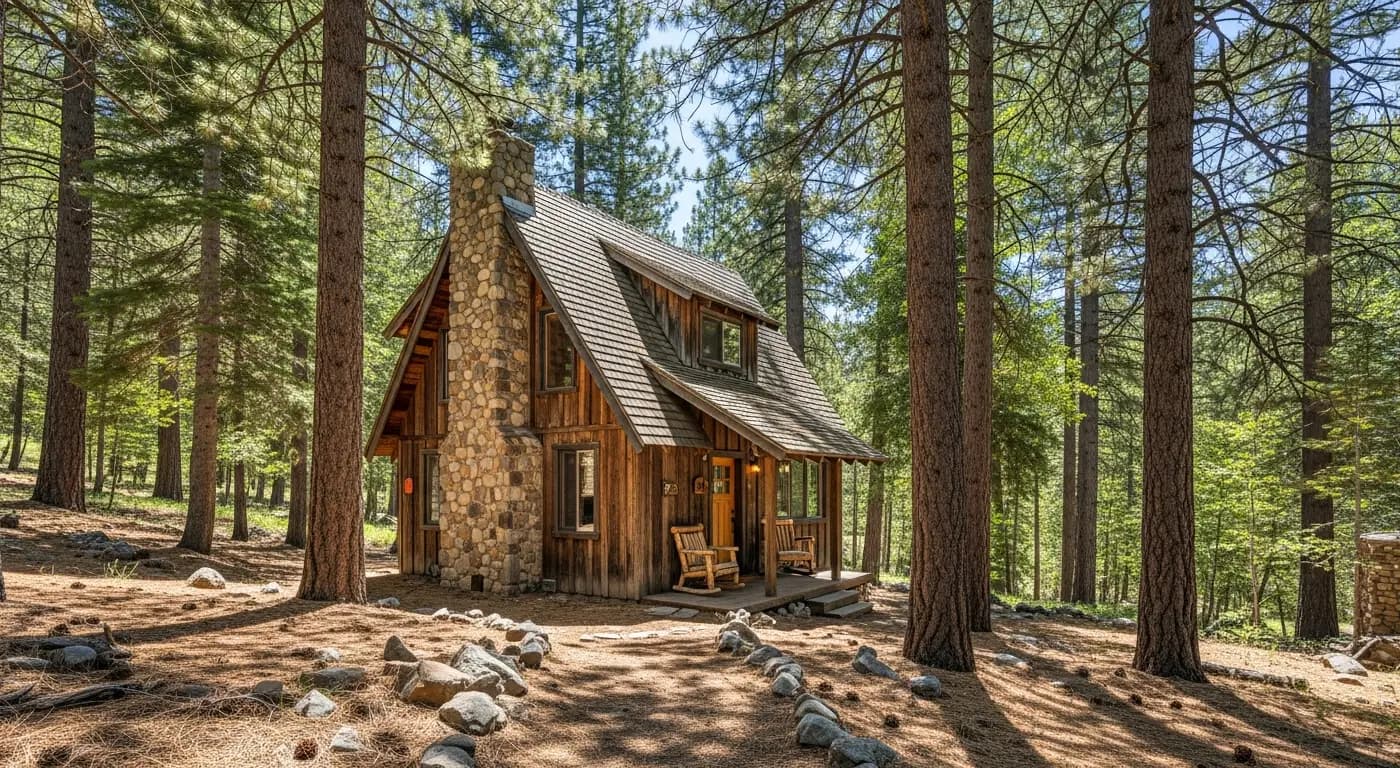
Sierra Property Buyers buys Nevada City homes directly — Victorians in and around the downtown historic district, hillside houses above Deer Creek, and cabins on forested parcels where insurance has become the obstacle — as-is, with no repairs, no commissions, and no financing contingency. With no lender and no insurance binder in the deal, two common reasons a Nevada City escrow falls apart drop out. You get a written offer within 24 hours, and we can close in as few as 7 days with clear title; most close in 10–14 days.
Situations We Help With in Nevada City
Sell As-Is
Your Nevada City home doesn't need to be perfect. We buy properties in any condition — from minor cosmetic issues to major structural problems.
Foreclosure
If you're facing foreclosure on your Nevada City property, a fast cash sale can help you protect your credit and walk away with equity.
Inherited Property
Inherited a Nevada City home you don't need? We make the process simple — no cleaning, no repairs, no hassle.
Probate
Navigating probate with a Nevada City property? We work with attorneys and courts to make the sale as smooth as possible.
Divorce
Selling a Nevada City home during divorce? We provide a fast, fair sale so both parties can move forward.
Unwanted Rental
Tired of being a landlord in Nevada City? We buy rental properties with or without tenants in place.
How It Works in Nevada City
Submit Your Property
Tell us about your Nevada City property — address, condition, and your timeline. Call us, fill out the form, or text us. No obligation.
We Review & Call You
We analyze recent sales in Nevada City, assess your property, and present a fair, written cash offer — usually within 24 hours.
Close on Your Timeline
Accept the offer, choose your closing date, and we handle everything. We pay all costs. You get cash and move on.
Selling a Nevada City Home for Cash — Historic Victorians, Hillside Houses, and Forest Parcels
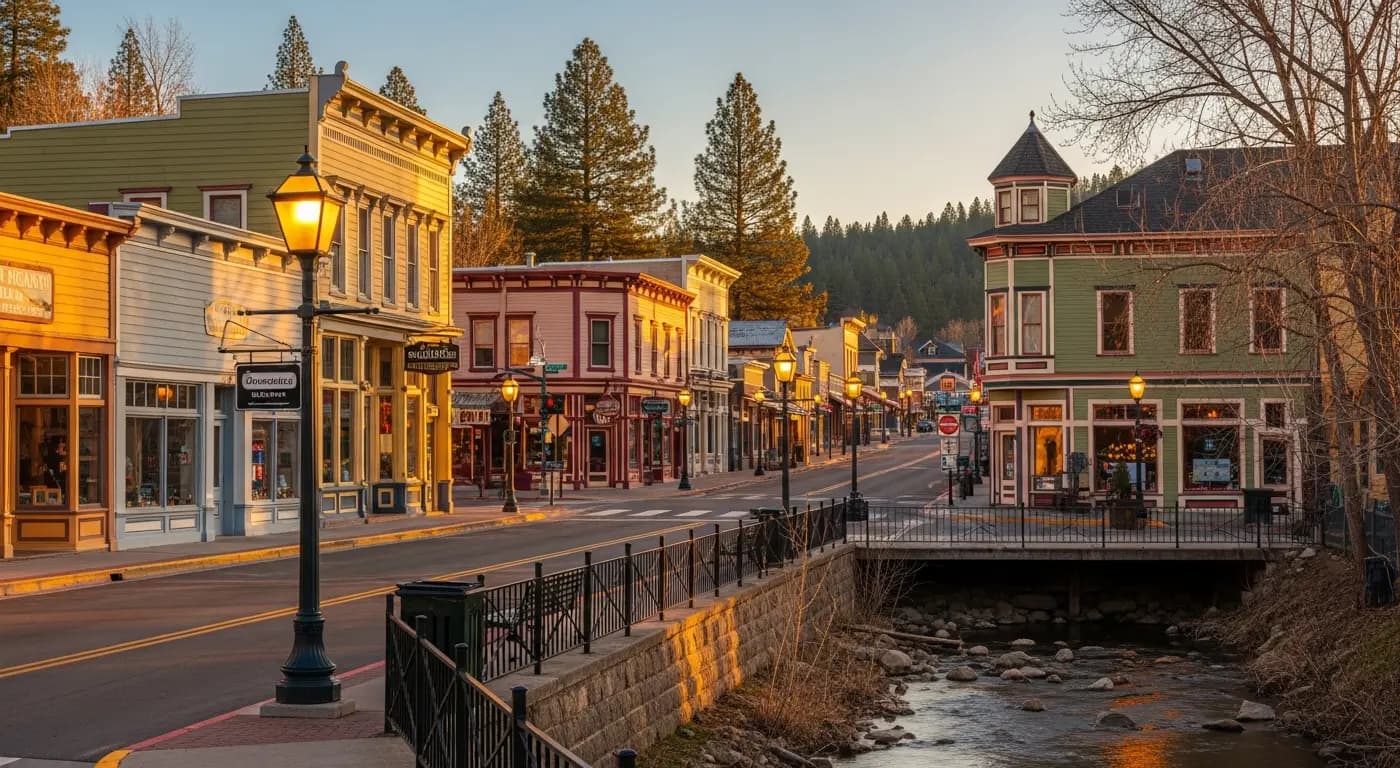
Nevada City is the Nevada County seat, a city of roughly 3,150 residents (3,152 in the 2020 Census) at about 2,480 feet where Highways 49 and 20 meet. It incorporated in 1856, and its 16-acre Downtown Historic District — 70 contributing buildings dating from 1856 to 1917 — was listed on the National Register of Historic Places in 1985. Broad Street's gas lamps and Victorian storefronts, the Nevada Theatre, which opened in 1865, the Miners Foundry cultural center, and the streets climbing the hillsides above Deer Creek give the town its look. The housing market underneath is harder than the postcards suggest: old houses with old systems, a small buyer pool, rising insurance costs, and the upkeep that historic and forest properties demand in a fire-prone county. Sierra Property Buyers is a direct cash home buyer serving Nevada City and the surrounding unincorporated Nevada County area. We buy Victorian homes downtown, mid-century houses on the surrounding hillsides, cabins on remote mountain parcels, and everything between, in any condition. No repairs, no agent commissions, and no financing contingency.
Why Nevada City Homeowners Sell to a Cash Buyer Instead of Listing Traditionally
Nevada City's real estate market is constrained by one plain fact: the buyer pool is small. This is a town of about 3,150 people in a county of roughly 102,000, some 60 miles from Sacramento and far from any large employer. The people who buy in Nevada City are choosing this specific community for its character, its arts scene, its mountain setting, and its distance from suburban California. That self-selecting buyer pool means your property is not competing for attention from thousands of house hunters the way a home in Roseville or Folsom would be. It is competing for the attention of a relatively small number of people who have specifically decided that Nevada City is where they want to live — and who can also afford to purchase a home that may need significant work, carry expensive insurance, and require ongoing mountain property maintenance. When you list a Nevada City home on the MLS, you may wait months for a qualified buyer to appear, and if your property has complications — deferred maintenance, historic-district permit rules, well and septic issues, fire zone challenges, or access limitations — the wait can stretch much longer. Every month on the market means another mortgage payment, another insurance premium, another round of property maintenance, and another chance for something to go wrong. With a direct sale, we are the buyer. We do not need to be found, qualified, or convinced. We make a written cash offer based on the property's current condition and close on a date you choose.
Nevada City's fire exposure is on the state's own map. The State Fire Marshal's 2025 Local Responsibility Area map puts all of the city's roughly 1,547 acres of local-responsibility land in the Very High Fire Hazard Severity Zone, with none rated Moderate or High; the 2007–11 map had 1,327 acres in Very High. The rating is driven by steep, wooded ravines along Deer Creek and Little Deer Creek, narrow nineteenth-century streets laid out for wagons, and blocks of closely spaced wood-framed houses. Residents also remember the Jones Fire, started by lightning on August 17, 2020, which burned about 705 acres west of town toward Jones Bar Road and the South Yuba canyon, destroyed homes, and put close to 4,000 people under evacuation orders, as well as the public safety power shutoffs PG&E used in 2019. Carriers price all of that. Owners of hillside Victorians on Prospect, American, and Nabob Hills, and of cabins out Red Dog and Gracie Roads, have watched admitted insurers non-renew and been pushed to the California FAIR Plan plus a difference-in-conditions policy, often at a much higher premium. For retirees and artists who bought here when it was cheaper, that cost alone can force a sale. And it hurts a listing twice: a buyer's lender requires proof of insurance before funding, and a quote that comes back high or late in escrow is a common way a Nevada City sale falls through. Because we buy with our own funds, coverage is something we arrange after we own the house, not a condition of closing.
Nevada City's housing stock is among the oldest in our service area, and its age shows up in the repair bills. The downtown core and the residential streets climbing the hillsides above Broad Street and Commercial Street contain homes dating to the 1860s through the 1890s — Victorian, Italianate, and vernacular Gold Rush-era structures built with old-growth timber, stone foundations, and construction techniques that predate every modern building code. Stone foundations crack, settle, and admit moisture. Old-growth timber framing can hide decades of termite damage. Knob-and-tube wiring, still present in some Nevada City homes, is something many carriers won't insure without a rewire, and in a plaster-walled Victorian that is a major project. Galvanized steel plumbing corrodes internally, reducing water pressure and eventually requiring replacement. Single-pane windows, minimal insulation, and drafty construction make heating costly through Nevada City's cold, wet winters. Inside the city's Historical Combining District, exterior alterations, demolition, and most signs need a permit from the planning commission, which can limit modernization options and add cost to any work that is approved. For owners who have watched upkeep outrun their budget, or for heirs who inherit a deteriorating Victorian, paying for a full round of structural and systems repairs before listing is often not realistic. We buy these properties in their current condition, and our offer reflects what restoration will realistically cost after closing.
Inherited houses are a frequent reason Nevada City homes change hands. The town skews older, and as longtime residents — many of whom arrived during the 1970s back-to-the-land years or retired here from Bay Area careers — pass away or move to care, their children inherit homes that need attention right away. Those heirs often live in Sacramento, the Bay Area, Portland, Los Angeles, or farther, and face managing a sale in a small mountain market from a distance. The home may be full of a lifetime of possessions. The roof may be failing. The yard may be overgrown and out of defensible-space compliance. The septic system may be overdue for pumping. And the heir may have no idea what the property is worth in its current condition, because Nevada City's market does not move like suburban Sacramento's. Heirs can sell to us as-is and leave behind anything they don't want. If the estate is in probate, we coordinate with the estate's attorney so the sale follows the court process; with full authority under the Independent Administration of Estates Act, a personal representative can sell after a 15-day Notice of Proposed Action without court confirmation. Documents can be signed remotely, so out-of-area heirs do not need to travel to Nevada City unless they choose to.
Time pressure in Nevada City often runs through the county seat itself. The Nevada County Superior Court at 201 Church Street hears the probate, conservatorship, and family-law cases that set many local sale deadlines, and owners who live a few blocks from it are sometimes the ones least able to wait out a slow listing. A Nevada City house listed in November can sit until the Victorian Christmas evenings are long over and the spring market opens; even in peak season, an older home on a steep lot with a stone foundation, knob-and-tube wiring, and a buyer who needs a loan and a FAIR Plan quote can take a long time to close, if it closes at all. If you are facing a trustee sale date, a court-ordered division of property, a relocation, or medical bills that will not wait, a cash sale changes the timeline: with clear title we can close in as few as 7 days, and most close in 10–14 days.
Understanding Nevada City's Unique Real Estate Landscape
Nevada City's real estate market is shaped by the town's history, its terrain, and its long resistance to the commercial development that drives values in more conventional communities. The downtown core — centered on Broad Street and Commercial Street, with Deer Creek running through the heart of town — is a National Register historic district roughly bounded by Spring, Bridge, Commercial, York, Washington, Coyote, and Main Streets, and one of the better-preserved Gold Rush-era downtowns in California. The residential streets around it hold a dense concentration of Victorian and Gold Rush-era homes, some carefully kept and others with decades of deferred maintenance. The Nevada Theatre, the Miners Foundry, the National Hotel, and the galleries, restaurants, and independent shops along Broad and Commercial sustain a loyal community and draw visitors, and the Hirschman's Pond trail on the north edge of town off Cement Hill Road is a short walk from many neighborhoods. But the same features that make downtown Nevada City appealing create practical problems for homeowners: narrow streets with limited parking, homes built on steep hillsides with difficult access, lots that are small by mountain standards, and permit rules shaped by historic preservation. Properties outside the immediate downtown — along Red Dog Road, Gracie Road, Old Downieville Highway, Champion Mine Road, and the roads that climb into the surrounding hills — offer more space and privacy but trade walkability for rural living: well and septic systems, propane heat, unpaved roads, dense forest that needs yearly clearing, and a drive to the services in Grass Valley.
Nevada City's culture influences its real estate market in ways a standard market analysis misses. This is a community with deep roots in the arts, alternative lifestyles, and river and forest conservation; the South Yuba River Citizens League's Wild & Scenic Film Festival fills the town's venues each winter, and the Nevada City Film Festival and summer street events do the same in warmer months. The town's residents include painters, musicians, writers, healers, organic farmers, and retirees who chose Nevada City because it offers a way of life different from mainstream suburban California. That creates demand for properties that do not fit conventional real estate categories: homes with artist studios and gallery spaces, properties with workshop buildings and live-work arrangements, off-grid and partially off-grid homes built around sustainability, and unconventional structures that reflect their builders. It also means many properties are hard to value through standard comparable sales, hard to finance through conventional lenders who prefer standardized housing, and hard to insure through carriers built around tract homes. As a cash buyer, we value these properties on what they are and what they would cost to bring up to a standard, rather than forcing them into a lender's checklist.
Nevada City sits at about 2,480 feet where Highway 49 and Highway 20 meet, roughly four miles northeast of Grass Valley and about 60 miles from Sacramento, and that position shapes every transaction. The town relies on Grass Valley — the larger, more commercial community to the southwest — for most chain retail and for the area's hospital, Sierra Nevada Memorial. Nevada City has long kept commercial development small to protect its historic character. That supports quality of life but means the local economy rests on county government, tourism, the arts, small independent businesses, and the spending of retirees and remote workers rather than a broad employment base. Nevada City is also a gateway: Highway 20 climbs east into the Tahoe National Forest, whose supervisor's office is on Coyote Street, and North Bloomfield Road drops north to the South Yuba River at Edwards Crossing. The seasonal rhythm is pronounced: summer and fall bring visitors and events, while winter — with its rain, occasional snow, short days, and quieter streets — slows the town. That seasonality affects real estate, with spring and summer bringing the most buyer activity and winter creating a slowdown that can trap homeowners who need to sell in the off-season. We buy in every season. Whether you contact us in July or January, we evaluate your property on its current condition and year-round comparable sales, and we close on your schedule.
Types of Nevada City Properties We Buy for Cash
Nevada City's housing stock is among the most architecturally varied and historically significant in our service area. We buy every type of residential property here — from downtown Victorians to remote mountain cabins — and price each one on its own condition.
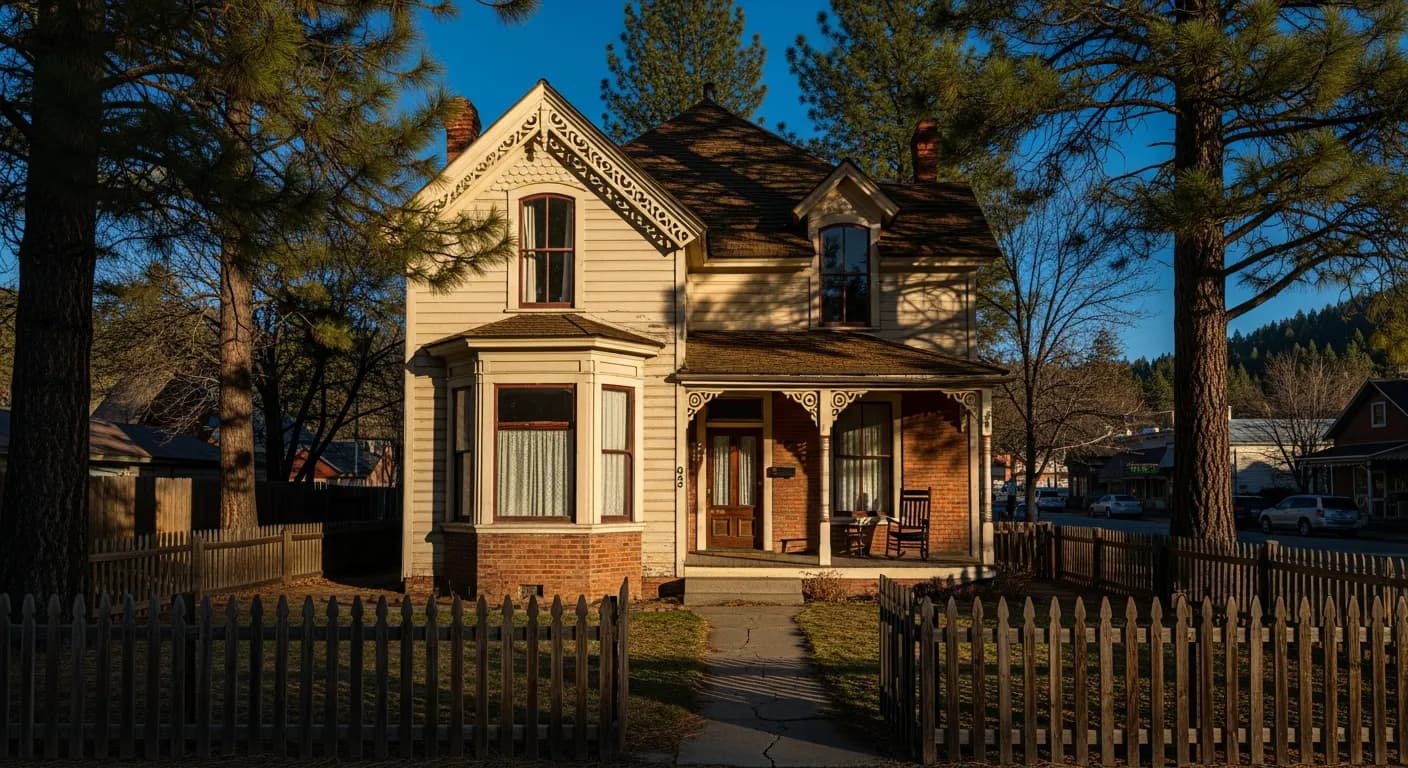
Gold Rush-era Victorians and historic homes in and around the National Register-listed Downtown Historic District are the town's signature houses. Some date to the 1850s through 1890s and feature old-growth timber framing, stone foundations, ornate woodwork, and construction techniques that predate all modern codes. Many have knob-and-tube wiring, galvanized plumbing, single-pane windows, and minimal insulation. A full restoration to modern standards can cost more than many buyers can finance on top of the purchase price. We buy historic Victorians in any condition and account for the Historical Combining District permit when we price any exterior work.
Hillside homes on the winding streets above Broad Street and Commercial Street offer mountain views and walkable downtown access but bring their own problems: steep driveways, retaining wall maintenance, drainage issues on sloped lots, and limited garage or parking space. Access for contractors and delivery trucks can be difficult, which raises renovation costs. These factors narrow the traditional buyer pool but don't affect our willingness to purchase.
Rural mountain properties outside the city limits — along Red Dog Road, Gracie Road, Old Downieville Highway, and the network of roads climbing into the surrounding hills — cover the full range of mountain living. They run from well-kept custom homes on cleared acreage to owner-built cabins on steep, forested lots reached only by unpaved single-lane roads. Well and septic systems, propane heat, wood stoves, and limited cell and internet service are standard. We buy throughout this rural landscape without requiring any infrastructure improvements.
Artist studios, live-work spaces, and unconventional structures reflect Nevada City's creative community. Properties with attached studios, converted barns or outbuildings used as gallery space, or non-standard construction methods are common here. These properties are often difficult to appraise and finance through conventional channels because they don't fit standard lending categories. As a cash buyer, we evaluate each property on its own merits and make offers based on what it is — not what a lender's checkbox form says it should be.
Income properties also turn up here: Victorians split into upstairs and downstairs flats near the Nevada County courthouse and the Rood Center on Maidu Avenue, cottages behind main houses, and small apartment buildings rented to county employees, students at Sierra College's Grass Valley campus, and service workers. Some conversions were permitted decades ago and some were never permitted. We buy them occupied or vacant and resolve unit status with the city after closing.
Nevada City Neighborhood Guide: Where We Buy and What to Expect
Downtown and the Broad Street area is the historic heart of Nevada City — gas lamps, Victorian storefronts, the Nevada Theatre, and Deer Creek running below. Residential properties in the immediate downtown area sit on small lots on steep hillsides, many reached only by narrow roads or staircases. The setting is appealing but the practical challenges are real: limited parking, difficult access for construction vehicles, nearby commercial noise, and historic-district permit requirements that add cost and complexity to exterior changes. We buy in downtown Nevada City regardless of these constraints.
The residential hillsides above downtown — Prospect Hill, American Hill, Nabob Hill, and the streets climbing north and east from the commercial core — contain the highest concentration of historic homes in the community. Properties here range from carefully maintained to badly deteriorated, and the steep terrain creates foundation, drainage, and access problems that flat lots don't have. Buyers new to the foothills often underestimate the cost of keeping up a hillside property. We factor all terrain-related considerations into our evaluation.
The Deer Creek corridor east of downtown, along Old Downieville Highway and Champion Mine Road where the Deer Creek Tribute Trail runs, mixes historic homes, newer construction, and rural properties on larger lots. The creekside setting is attractive but brings specific considerations: flood-zone mapping on some parcels, riparian setback requirements, and seasonal groundwater that can affect foundations and septic systems. We check the flood map and setbacks for each parcel before we make an offer.
Gracie Road, Red Dog Road, and the outer rural areas hold Nevada City's most remote properties — homes on 5, 10, 20, or more acres of forested mountain land. Access may be by an unpaved road maintained by a road association or by the owner alone. Properties here face the hardest fire insurance market and the highest defensible-space upkeep in the area. For owners who have reached the limits of what they can manage — or for heirs who have no interest in rural mountain property — we offer a straightforward cash sale.
The Highway 49/20 corridor between Nevada City and Grass Valley contains a mix of commercial-adjacent properties, newer residential development, and transitional parcels. Properties here have easy access to both towns but may have highway noise or commercial-adjacency issues. We buy throughout this corridor.
Nevada City History That Still Turns Up in Escrow
Before the Gold Rush the site was a Nisenan village called Ustumah. Miners opened the Gold Tunnel on the north side of Deer Creek in 1850, the town’s first mine, and the first sawmill went up on the creek that August. The town incorporated in 1856 and added “City” to its name in 1864, after the new state next door took the name Nevada. Those origins explain why so many parcels near Deer Creek, Little Deer Creek, and the old Coyote Street and Sacramento Street neighborhoods have irregular boundaries, deeds that reference long-gone structures, and occasional mining reservations in the chain of title.
Infrastructure has its own history. The city’s wastewater plant was built in the Deer Creek canyon in 1949 and upgraded in 1984, 1993, and 1997, and older houses on the hillsides often connect to it through clay or cast-iron laterals laid generations ago. Many homes in the historic core were wired, plumbed, and re-plumbed in stages. Firehouse No. 1, now a museum on Main Street, is a reminder that fire has shaped building rules here since the 1850s; downtown burned repeatedly in the early years, and the brick commercial blocks that survive were built in response.
For a seller, the practical effect is that Nevada City escrows tend to involve more reading than most: a longer preliminary title report, a historic-district check before any exterior work, and a closer look at sewer laterals, retaining walls, and access stairs. We price those items into the written offer up front rather than raising them in the middle of escrow.
The True Cost of Selling a Nevada City Home Traditionally
A traditional sale in Nevada City costs more than most owners expect, and the reasons are specific to the town.
On a hypothetical $500,000 Nevada City sale, a combined 5–6% commission for both sides would be $25,000–$30,000. Commissions have been negotiable since the August 2024 NAR settlement, so ask any agent for their actual rate. Selling to us involves no commission at all; the price we offer is the purchase price, and your loan payoff and prorated taxes come out of it through escrow.
Pre-sale work runs higher here than in the valley. A small pool of contractors handles historic restoration, steep lots with stair-only access add labor, and exterior changes inside the Historical Combining District need a planning commission permit before work starts. Rewiring a plaster-walled Victorian, stabilizing a stacked-stone foundation or a failing retaining wall, or roofing a steep, multi-gabled house each costs well above the same job on a valley ranch house. Owners who try to bring a dated home up to market can spend a large share of their equity before the first showing.
Carrying a vacant house in Nevada City is expensive. Listings in a town this small can sit for months, longer if they hit the November-to-February lull. Property taxes, a FAIR Plan premium, utilities, and winter upkeep (gutters full of pine needles, frozen hose bibs, storm cleanup) all keep running for every one of those months.
Add commissions, preparation, carrying costs, and seller-paid closing costs, and a traditional Nevada City sale costs far more than the commission alone. Our offer is lower than a restored-home list price by design, but it comes without those outlays, and with clear title most close in 10–14 days. Put our written offer next to an agent's estimated net sheet and choose the one that leaves you better off.
How the Math Works: A Nevada City Hillside Home (Illustrative)
This is a hypothetical example with round numbers, not a transaction we completed. It is modeled on the kind of steep-lot situation common in the neighborhoods above Broad Street, to show how a stalled listing and a cash offer can be compared.
The situation: A couple owns a 1,800 sq ft home on one of Nevada City's steep hillside streets, bought years ago as a weekend retreat and potential retirement home. Their plans change — age and health make the steep driveway and stairway access impractical. The home has two-decade-old systems, a deck showing dry rot, and the wear of a property used part-time. The hillside location means access problems for contractors, retaining-wall concerns, and the steep driveway that has become the main reason for selling.
The market challenge: Listed with an agent at $525,000 in this example, the home sits through the summer and draws offers contingent on financing. The first buyer's inspection turns up a costly retaining-wall repair and the buyer walks; a second buyer can't get an affordable insurance quote and withdraws.
How we'd evaluate it (illustrative figures): after-repair value $495,000, below the original list price to reflect the market's response. Renovation (deck replacement, retaining-wall repair, cosmetic updates): $65,000. Holding and resale costs: $38,000. Our margin: $22,000. Illustrative cash offer: $495,000 − $65,000 − $38,000 − $22,000 = $370,000.
The comparison an owner would weigh: a written offer near $370,000 with no repairs and a close in as few as 7 days with clear title (most close in 10–14), against what a relisting would net after commission, the retaining-wall and deck repairs or a price cut to cover them, seller closing costs, and more months of holding. Compare our written offer with your agent's estimated listing net. If listing would net you more and you can wait, list; we'll tell you if that's how the numbers look.
Selling a Home in Nevada City: The Historic District and the Fire-Zone Rule
Two sets of rules shape a Nevada City sale more than anything else, and neither one is about price. The first is the city's historic district. The second is the state's fire-zone documentation requirement. Neither stops a sale. Both change who can buy and what they will pay.
Downtown and the blocks around it sit in the city's Historical Combining District (Article II of Chapter 17.68 of the Nevada City Municipal Code). Inside it, demolition, exterior alterations and most signs need a permit, applications go to the planning commission, and a denial can be appealed to the city council within 15 days. Work visible from the street is expected to fit the town's Gold Rush-era architecture. Selling the house does not trigger a review, and no city sign-off is needed to close. The rules land on the next owner's plans. A buyer who wants new windows, different siding, an addition or a second unit has to get through review first, and many financed buyers won't commit until they know the answer. Ask Nevada City Planning which rules apply to your parcel before you price work into a listing.
The fire-zone rule is California's, not the city's. In 2025 the State Fire Marshal issued updated hazard maps for cities, and Nevada City's map places all of its local-responsibility land in the Very High zone; most of the forested county land around it was already mapped High or Very High on CAL FIRE's State Responsibility Area maps. For a home in a High or Very High zone, Civil Code § 1102.19 requires the seller to give the buyer documentation that the property meets the defensible-space law, or, if there is none, the buyer can agree in writing to obtain it after closing. On a steep hillside lot, the clearing alone can be a real job. When we buy, you don't have to do that clearing before closing: the agreement puts it on us as the buyer.
The buyer pool is small by any measure. Nevada City has about 3,150 residents and only a modest number of home sales in a typical year, and only a fraction of those are houses that need major work. Few buyers in any given month will take on a large project on a steep hillside, inside a historic district, with a fire-zone insurance bill. Insurance shrank that pool further: many buyers now face a FAIR Plan premium, which covers fire and named perils, plus a separate difference-in-conditions policy for liability, theft and water, and that monthly cost comes straight out of what they can afford to pay for the house.
If you own a Nevada City property and you're considering selling, contact us for a free cash offer. It costs nothing, comes with no obligation, and gives you a concrete written number to compare against any other option. Call (530) 704-7732. We're based about 25 miles down Highway 49 in Auburn and can schedule a walkthrough around your calendar.
We show our math — the comparable sales, condition, and repair costs behind your number.
Our commitments & verified reviews →Selling to Us vs. Listing in Nevada City
Nevada City Home Selling FAQ
Do I need city approval to sell a house in Nevada City's historic district?
Do you buy historic Victorian homes in Nevada City's downtown historic district?
Can you buy my Nevada City home if my homeowners insurance has been non-renewed?
What about Nevada City properties on dirt roads with well and septic systems?
How fast can you close on a Nevada City property?
I am an artist with a live-work studio property in Nevada City. Will you buy a non-standard property?
I inherited a Victorian in Nevada City and live out of state. How does the process work?
Does the historic preservation overlay affect your ability to buy in Nevada City?
Do you buy during winter when Nevada City is quiet and the market is slow?
How do you determine your offer price for a Nevada City property?
My Nevada City property has a complex title history from the Gold Rush era. Is that a problem?
Do you buy properties with environmental concerns — old mining tailings, asbestos, lead paint?
Can you buy my Nevada City home if I'm behind on the mortgage?
Is there any obligation if I request a cash offer on my Nevada City property?
Explore Your Specific Situation in Nevada City
Helpful Guides for Nevada City Sellers
Official sources and records
- Nevada County Clerk-Recorder
Recorded deeds, liens and notices of default for any parcel in the county.
- California Department of Insurance: California FAIR Plan
The state's fire-insurance plan of last resort, for homes regular carriers decline or non-renew.
- Board of Equalization: Proposition 19
How inherited and transferred homes are reassessed for property tax.
- CAL FIRE (State Fire Marshal): Fire Hazard Severity Zones
The official hazard-zone maps behind the natural-hazard disclosure at sale.
Further reading
- Nevada County Housing Market Guide: Grass Valley, Nevada City & Beyond
- Documents Needed to Sell a House in California: The Checklist
- How Much Do Cash Home Buyers Pay? An Honest 2026 Breakdown
- Are 'We Buy Houses' Companies Legit? How to Spot a Cash-Buyer Scam
Terms on this page
Plain-English definitions of the California terms this page uses.
Browse the full California property glossary →Nearby Areas We Serve
More Cities in Nevada County
Common Selling Situations
County Pages
Helpful Related Pages
Nevada City Selling Articles & Local Insights
Ready to Get Your Cash Offer?
No repairs. No fees. No obligation. Tell us about your property and get a fair cash offer — usually within 24 hours.