Selling a Home in Grass Valley, CA: As-Is Cash Offer in 24 Hours
Updated November 2026 · Sierra Property Buyers · Nevada County
Need to sell your house fast in Grass Valley? Whether you're dealing with foreclosure, an inherited property, or a house that needs repairs — we can help. We buy houses as-is, with no fees, no commissions, and flexible closing timelines.
Before you decide
A cash sale is not the right answer for every property. If your Grass Valley home is in sound condition and you can wait for a conventional buyer, listing usually nets more — and we will tell you when that is the case rather than let you find out afterward.
Run both numbers yourself →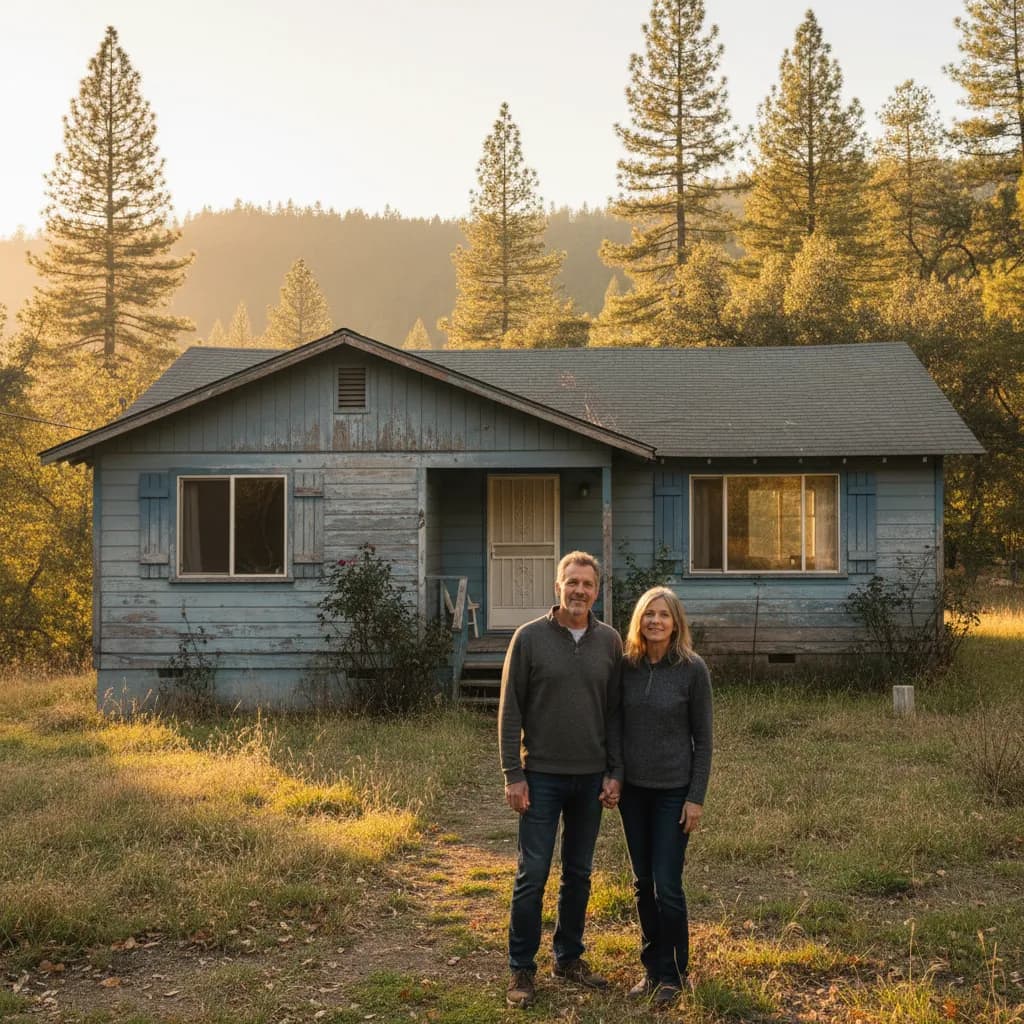
Can I sell my house fast for cash in Grass Valley, CA?
Yes. Sierra Property Buyers purchases Grass Valley homes directly — Gold Rush-era Victorians, mid-century ranches, manufactured homes on county acreage, and houses that have lost a buyer over a fire insurance quote — as-is, with no repairs, no fees, and no commissions. Because no lender or insurance binder is required, fire-zone status affects the price but never the closing, which can take as few as 7 days with clear title; most close in 10 to 14 days.
Situations We Help With in Grass Valley
Sell As-Is
Your Grass Valley home doesn't need to be perfect. We buy properties in any condition — from minor cosmetic issues to major structural problems.
Foreclosure
If you're facing foreclosure on your Grass Valley property, a fast cash sale can help you protect your credit and walk away with equity.
Inherited Property
Inherited a Grass Valley home you don't need? We make the process simple — no cleaning, no repairs, no hassle.
Probate
Navigating probate with a Grass Valley property? We work with attorneys and courts to make the sale as smooth as possible.
Divorce
Selling a Grass Valley home during divorce? We provide a fast, fair sale so both parties can move forward.
Unwanted Rental
Tired of being a landlord in Grass Valley? We buy rental properties with or without tenants in place.
How It Works in Grass Valley
Submit Your Property
Tell us about your Grass Valley property — address, condition, and your timeline. Call us, fill out the form, or text us. No obligation.
We Review & Call You
We analyze recent sales in Grass Valley, assess your property, and present a fair, written cash offer — usually within 24 hours.
Close on Your Timeline
Accept the offer, choose your closing date, and we handle everything. We pay all costs. You get cash and move on.
A Local Grass Valley Cash Home Buyer — Serving Every Neighborhood in Nevada County's Commercial Heart
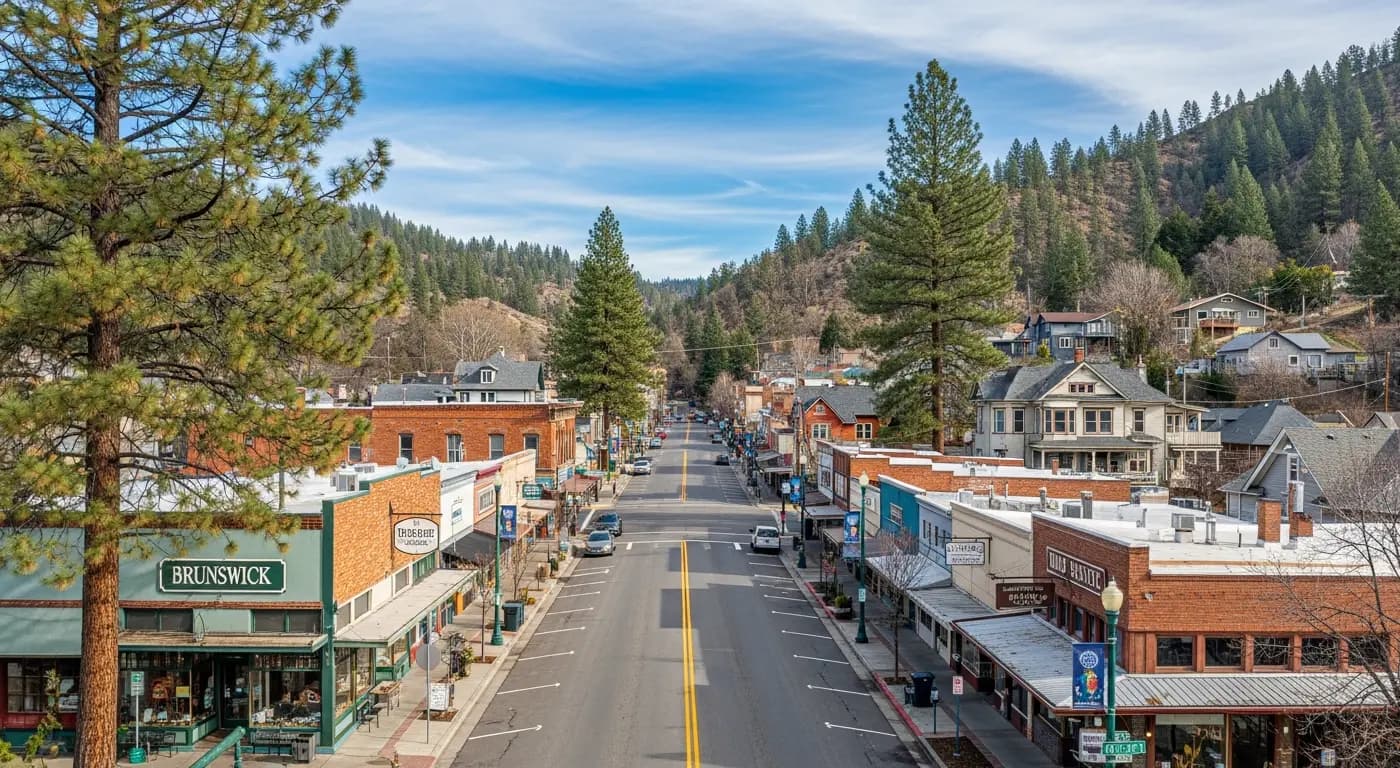
Grass Valley is the commercial and cultural heart of Nevada County — a Gold Rush city of roughly 14,000 residents (2020 Census) where Mill Street's Victorian storefronts give way to mid-century ranch neighborhoods along Brunswick Road, and newer subdivisions push outward toward the forested ridges that define the surrounding landscape. The city sits at the junction of Highway 49 and Highway 20 at approximately 2,400 feet elevation, serving as the primary shopping, medical, and services hub for the entire western Nevada County region. This is a city with over 170 years of continuous building history, from the hand-hewn timber-frame homes of the 1850s Gold Rush era to the manufactured homes placed on county parcels in the 1990s and 2000s. That extraordinary diversity of housing stock creates a community with genuine character — but also a real estate market with challenges that Sacramento Valley homeowners never encounter. Sierra Property Buyers is a direct cash home buyer serving all of Grass Valley and the surrounding unincorporated Nevada County area. We purchase homes, cabins, manufactured homes, and multi-unit properties in any condition, in any neighborhood, on any timeline — with no repairs and no agent commissions. Whether you own a Victorian on South Church Street, a ranch home off Sutton Way, a fixer on Idaho Maryland Road, or a manufactured home on acreage along Dog Bar Road, we will make you a fair cash offer and close when you are ready.
Why Grass Valley Homeowners Sell to a Cash Buyer Instead of Listing on the Market
Grass Valley's real estate market operates under constraints that make traditional home selling significantly more difficult than it is in the Sacramento Valley or suburban Placer County. The fundamental challenge is buyer pool size. Grass Valley is not a commuter suburb — it is a destination community, and the people who buy here are specifically choosing mountain-foothill living with all of its rewards and demands. That self-selecting buyer pool is inherently smaller than what you would find in Roseville, Folsom, or even Auburn. When you list a Grass Valley home on the MLS, you are marketing to a limited audience, and if your property has any complications — deferred maintenance, well and septic issues, unpermitted additions, fire zone designation, or simply an unfashionable layout — the pool of qualified, interested, and willing buyers shrinks further. Homes with condition, septic or insurance problems can sit noticeably longer in Grass Valley than comparable homes in Rocklin, accumulating carrying costs and price reductions that erode your equity with each passing month. The seasonal nature of the market compounds this problem: buyer activity peaks in spring and summer, and if you miss that window or need to sell during the fall and winter months, you may find yourself waiting until the following spring for meaningful showings. A direct sale takes that uncertainty out. We buy in every season, in every market condition, and our offer does not depend on finding a retail buyer willing to pay top dollar for a property that needs work. We are the buyer.
The insurance crisis hitting Nevada County has fundamentally altered the economics of homeownership in Grass Valley and is now a common reason owners decide to sell. Several major insurers non-renewed many Grass Valley-area policies in 2023 and 2024, citing wildfire risk. Some have since moved to write new business again — Farmers lifted its new-policy cap in late 2025, and the Department of Insurance reported in 2026 that State Farm and Allstate had filed to resume new business — but fire-zone homes still face limited options, and many owners who carried standard coverage for decades have moved to the California FAIR Plan, the state's insurer of last resort. A FAIR Plan policy covers fire and named perils, with contents coverage available, so most owners add a separate difference-in-conditions policy for liability, theft and water damage, and the two together usually cost well above what the old policy did. For retirees on fixed incomes — and Grass Valley has a significant retiree population — this cost increase can represent the difference between being able to stay and being forced to sell. But here is the cruel irony: the same insurance crisis that is pushing homeowners to sell is also making it harder to sell through traditional channels, because buyers who need mortgage financing are required by their lenders to obtain homeowners insurance, and when insurance is prohibitively expensive or unavailable, those buyers cannot close. The result is a shrinking pool of cash-capable buyers in a market that was already limited. Sierra Property Buyers purchases with our own funds and handles insurance matters independently after closing. Your property's insurance status — whether you have coverage, have been non-renewed, or are on the FAIR Plan — has no impact on our ability to buy.
Grass Valley's aging housing stock presents maintenance and repair challenges that accumulate over time and can overwhelm homeowners who lack the financial resources or physical ability to keep up. The homes along Main Street, Mill Street, South Church Street, and the older residential streets near downtown date to the late 1800s and early 1900s. These Victorian and Craftsman-era homes have stone or brick foundations that were never designed to modern seismic or moisture standards. They have original-growth timber framing that is beautiful but may harbor termite damage, knob-and-tube electrical wiring that many insurers will not cover without remediation, galvanized steel plumbing that corrodes from the inside and reduces water pressure to a trickle, and single-pane windows that drive up heating bills during Grass Valley's cold, wet winters at about 2,400 feet. Bringing all of that to modern standards can be very expensive, depending on scope — money that many homeowners simply do not have available, especially when the after-repair value of the home may not justify the investment. The mid-century homes along Brunswick Road, Sutton Way, and the neighborhoods between Highway 49 and Highway 20 face their own challenges: original roofs reaching or exceeding their lifespan, outdated electrical panels, aging HVAC systems, and asbestos-containing materials in popcorn ceilings, floor tiles, and insulation. Even the newer homes built in the 1990s and 2000s on the city's outskirts are now reaching the age where roofs, water heaters, and exterior materials need replacement. Sierra Property Buyers buys homes in every condition, from well-maintained to severely deferred, and our offers reflect the property's current state — not what it might be worth after renovations you cannot afford to make.
Inherited homes are a common reason owners consider a cash sale. Grass Valley's population skews older than the state's, and as longtime residents pass away or move to assisted living facilities, their children — many of whom left Grass Valley decades ago for careers in Sacramento, the Bay Area, Portland, or beyond — inherit homes that need substantial work and are located hours from where they live. Managing a renovation and traditional sale from a distance in a small mountain market is logistically exhausting and financially risky. The home may need to be cleared of a lifetime of possessions, repaired to market standards, staged, listed, and then monitored through months of showings and negotiations — all while the heirs are paying property taxes, insurance, utilities, and maintenance on a property they do not occupy. We eliminate this entire burden. We buy inherited properties as-is, including the contents if you prefer, and we handle the entire closing process through mobile notary services so that out-of-area heirs never need to travel to Grass Valley. The probate process adds complexity, but we can buy at any stage of probate and work with your attorney on the paperwork.
For Grass Valley homeowners facing financial distress — whether from job loss, medical bills, divorce, or mortgage delinquency — the traditional market's timeline is often incompatible with the urgency of the situation. A foreclosure notice does not wait for you to find a buyer, negotiate repairs, and navigate a financed escrow. A divorce settlement cannot remain in limbo while a house sits on the market for months. Medical bills do not stop accumulating while you wait for spring buyer traffic. Sierra Property Buyers can close in as few as 7 days when title is clear; most close in 10 to 14 days. We can work toward closing before a trustee sale date when time allows. A recorded Notice of Default does not rule out a sale; what matters is how much time is left before the trustee's sale and how fast escrow can get a payoff figure from the servicer. If you are in a time-sensitive situation, speed and certainty matter more than maximizing your sale price — and that is exactly what we provide.
Grass Valley's Neighborhood-by-Neighborhood Market Reality
Grass Valley is not a single real estate market — it is a collection of distinct micro-markets, each with its own character, price points, and selling challenges. The historic downtown core along Mill Street and Main Street contains some of the most architecturally significant residential properties in the Sierra foothills: Victorian-era homes with ornate trim, wraparound porches, and the craftsmanship of an era when lumber was abundant and labor was skilled. These homes command premium prices when fully restored, but many have been divided into multi-unit rentals, deferred for decades, or modified in ways that compromise their historic character. Selling a downtown Grass Valley Victorian through traditional channels requires finding a buyer who appreciates historic architecture, has the financial capacity to purchase without contingencies on the home's age-related issues, and is willing to accept the trade-offs of downtown living — smaller lots, street parking, and the activity of downtown, where the block of Mill Street between Main and Neal has been a car-free plaza since 2020, made permanent in 2021. That is a narrow buyer profile, and properties that do not meet it can languish on the market. The neighborhoods along Brunswick Road on the city's east side, and north of downtown toward Lyman Gilmore, contain a mix of mid-century homes, newer construction, and commercial-adjacent properties that reflect Grass Valley's growth along its primary commercial corridor. Properties here benefit from proximity to shopping and services but may back up to commercial uses or busy roads that affect desirability. The Idaho-Maryland Road area has been a subject of community debate for years over Rise Gold's plan to reopen the Idaho-Maryland Mine. Nevada County denied the project in December 2023, and on May 7, 2026 Nevada County Superior Court denied the company's vested-rights challenge, finding the right had been abandoned; Rise has said it will appeal or sue in federal court. Whether you view the mine as economic opportunity or environmental threat, the chance of further litigation is itself a factor some buyers weigh. We buy in all of these areas and our offers account for each neighborhood's specific characteristics.
Outside the Grass Valley city limits, the unincorporated Nevada County areas that use Grass Valley as their mailing address encompass a vast and varied landscape of rural properties. Homes on Banner Mountain to the east, along You Bet Road and Red Dog Road to the east and southeast, on Dog Bar Road running south toward the Bear River, along the Rough and Ready Highway to the west, and on the network of roads extending into the surrounding hills and ridges represent the full spectrum of mountain living — from well-maintained custom homes on groomed acreage to owner-built cabins on steep, densely forested lots accessible only by unpaved roads. Most of these county properties are on septic systems, with either a private well or NID water, are heated by propane or wood, and are served by county fire districts — including the career-staffed Nevada County Consolidated Fire District — and CAL FIRE rather than the city fire department. The maintenance demands are substantial: defensible space clearing must be performed annually per Cal Fire and Nevada County requirements, wells require periodic testing and occasional pump replacement, septic systems need pumping every 3 to 5 years and eventual replacement, and the roads themselves may require private maintenance through road associations or individual effort. For homeowners who can no longer manage these demands — or for heirs who have no interest in taking them on — selling to a cash buyer who understands rural property realities is the most practical solution. We do not penalize properties for being rural, being on well and septic, or requiring road access that would deter conventional buyers. We evaluate each property on its own merits and make offers that reflect the actual market for that specific type of property in that specific location.
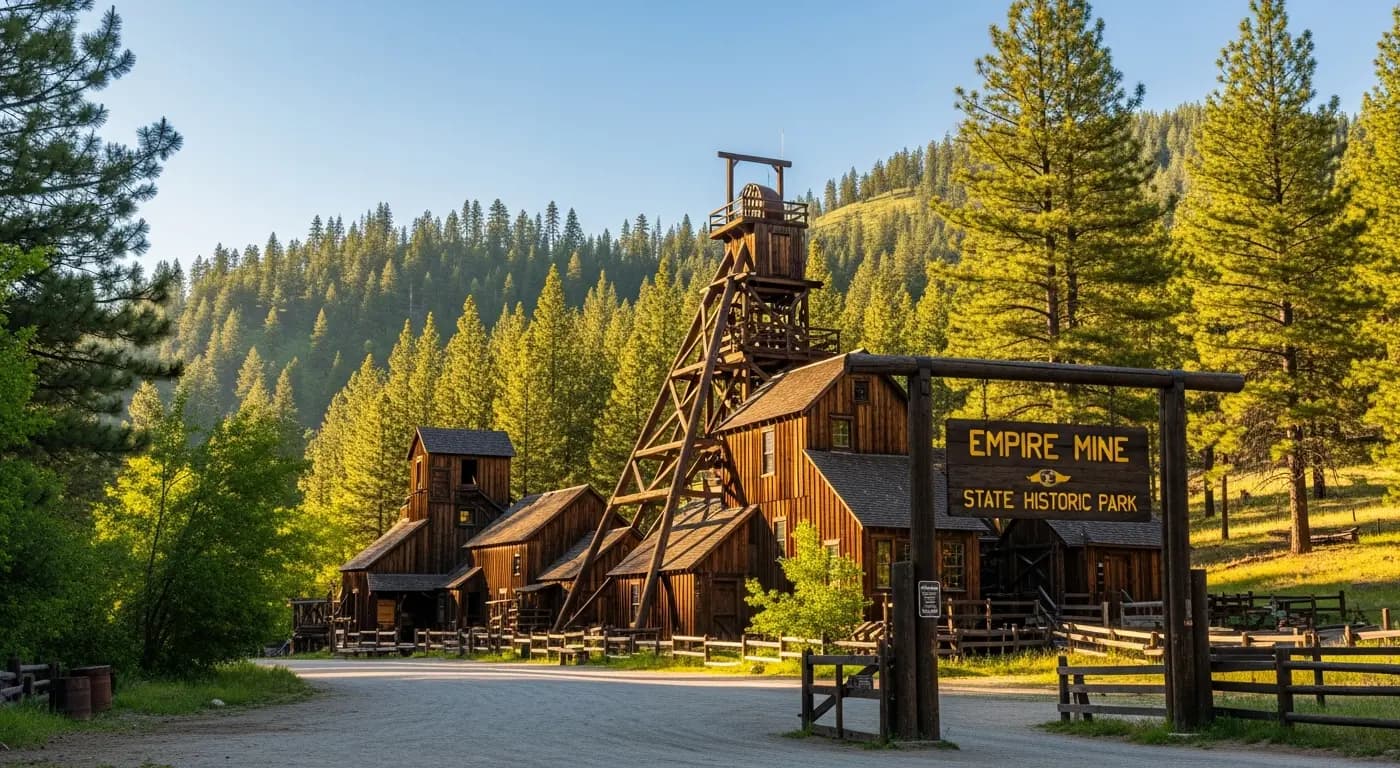
The Empire Mine State Historic Park, located just southeast of downtown off East Empire Street, is one of the region's premier attractions and a reminder of the Gold Rush heritage that built this city. Properties near the park benefit from proximity to trails and open space but may also face restrictions related to historic mining activity — abandoned shafts, tailings deposits, and environmental remediation areas that can complicate development and affect property values. The seasonal rhythm of Grass Valley's economy, driven partly by tourism to Empire Mine and downtown's shops and restaurants, creates fluctuations in demand that affect the rental and sales markets alike. Summer brings visitors, events like the Nevada County Fair and the Draft Horse Classic, and a general increase in economic activity. Winter brings quieter streets, occasional snow that can isolate foothill properties, and a market that contracts as potential buyers postpone their searches until conditions improve. Sierra Property Buyers operates independently of these seasonal patterns. We buy in January as readily as we buy in June, and our pricing reflects current market conditions rather than the hypothetical premium a property might command during peak season. If you need to sell your Grass Valley area property — whether it is a historic Victorian downtown, a mid-century ranch along Brunswick Road, a manufactured home on county acreage, or a cabin in the woods off a dirt road — we are ready to make you a cash offer today.
Nevada County's cannabis industry, which emerged following legalization, has left its mark on some Grass Valley area properties. Homes and parcels that were used for cultivation — whether legally permitted or not — may have modifications that complicate traditional sales: upgraded electrical panels to support grow lighting, altered ventilation systems, converted garages or outbuildings, increased water usage that stressed wells, and in some cases soil contamination from fertilizers and pesticides. These properties can be difficult to sell through conventional channels because lenders may flag the modifications during appraisal, insurers may decline coverage, and retail buyers may be deterred by the property's history. We buy properties with cultivation histories and handle any necessary remediation, restoration, or permit resolution after closing. The property's past use does not prevent us from making an offer — we evaluate the underlying real estate and factor any needed corrections into our pricing.
Types of Grass Valley Properties We Buy for Cash
Grass Valley's 170+ years of continuous development have produced one of the most diverse housing stocks in the Sierra foothills. We buy every type of residential property in the Grass Valley area, and we price each one on its own condition, systems and location.
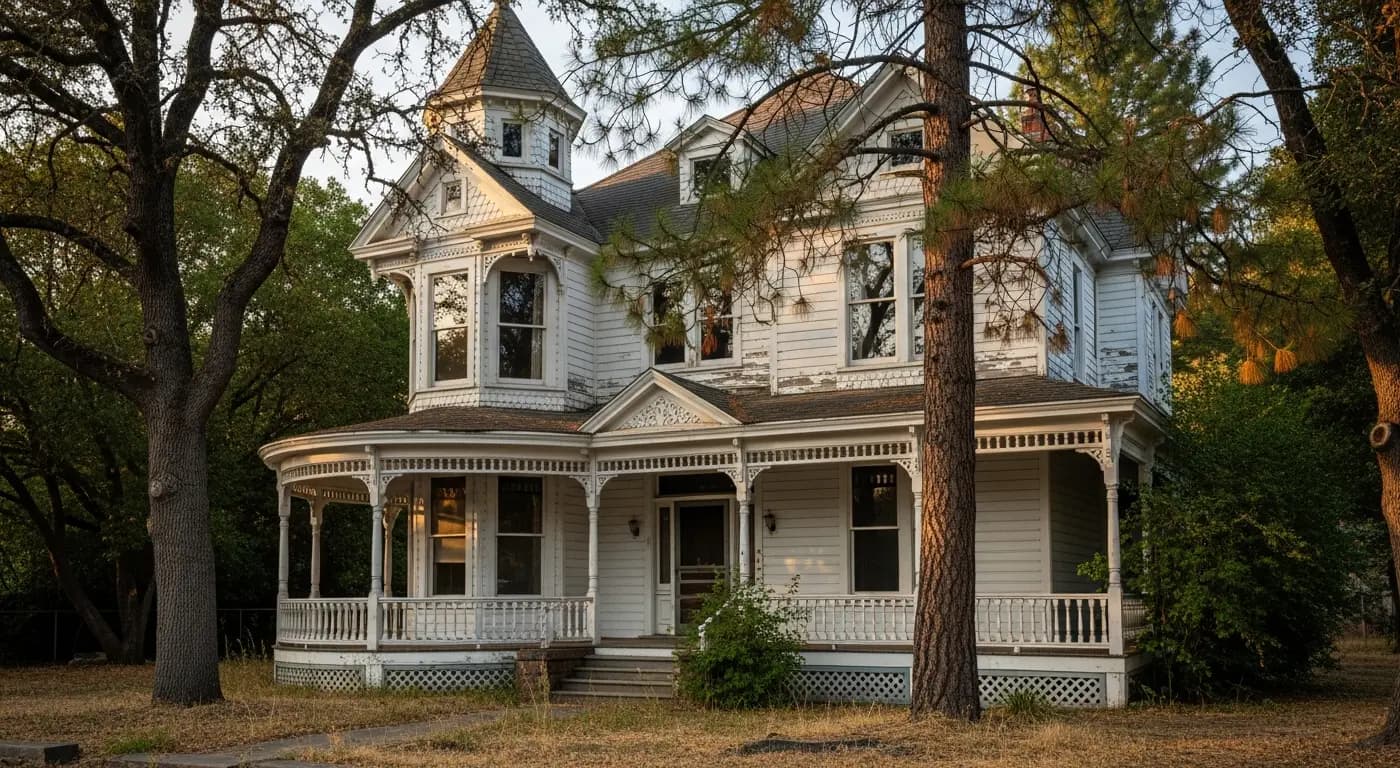
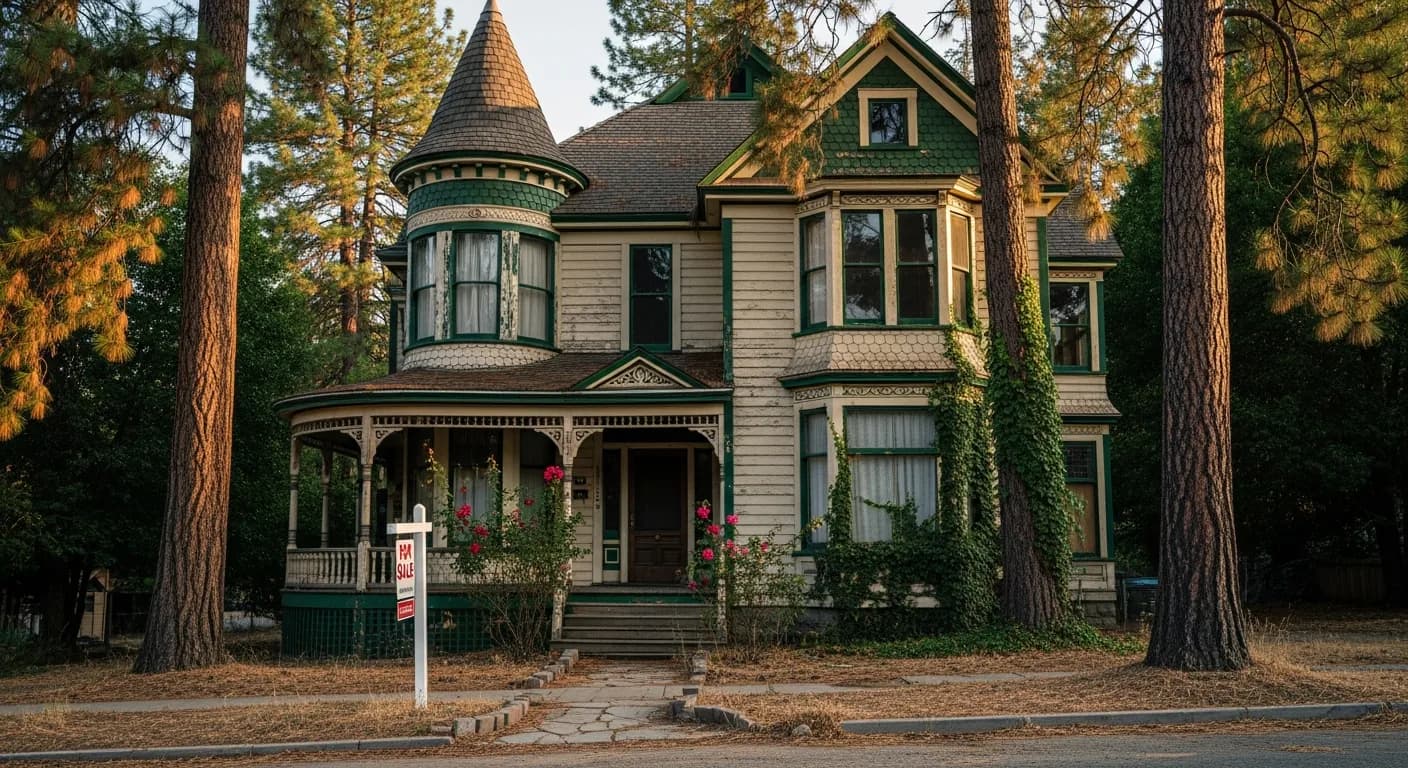
Historic Victorians and Gold Rush-era homes in the downtown core and surrounding residential streets are among Grass Valley's most distinctive properties. These homes — some dating to the 1850s and 1860s — feature original-growth timber framing, stone or brick foundations, ornate woodwork, and construction techniques that predate every modern building code. Many have been converted to multi-unit rentals over the decades, modified in ways that compromised their historic integrity, or simply left to deteriorate as maintenance costs exceeded what owners could afford. We buy these homes in any condition, from lovingly maintained to structurally compromised, and we factor the real cost of restoration or renovation into our offers.
Mid-century ranch homes from the 1950s through 1970s make up a large portion of Grass Valley's housing along Brunswick Road, Sutton Way, and the neighborhoods between Highway 49 and Highway 20. Common issues include original roofing past its useful life, aluminum wiring in some 1960s homes, outdated 100-amp electrical panels, galvanized plumbing nearing failure, and foundation settling where clay soils are present. HVAC systems in these homes are often original or first-generation replacements nearing the end of their service life. We buy these homes without requiring any updates or repairs.
Manufactured and mobile homes on owned or leased land represent a significant segment of the Grass Valley area housing market. Older manufactured homes — particularly those built before the 1976 HUD code changes — face severe financing restrictions that effectively eliminate most traditional buyers. Even newer manufactured homes on permanent foundations have a smaller buyer pool than site-built homes because many lenders either don't finance them or charge significantly higher rates. This limited financing landscape makes manufactured homes particularly well-suited for a cash sale. We buy manufactured homes in any condition, any age, on owned land or leased land.
Rural acreage properties in the unincorporated areas surrounding Grass Valley — along Dog Bar Road, You Bet Road, Red Dog Road, Banner Mountain, and the network of roads extending into the hills — present the most complex selling challenges. These properties may include multiple structures (residence, workshop, barn, guest cabin), private well and septic systems of various ages and conditions, propane or wood heat, unpaved access roads, and significant defensible space maintenance requirements. The buyer pool for these properties is inherently limited, and lenders impose strict requirements that rural properties frequently fail to meet. We buy rural Grass Valley-area properties without requiring road improvements, well testing, septic certification, or any other infrastructure upgrades.
Small rental buildings make up a meaningful slice of in-town Grass Valley: duplexes and fourplexes near Sierra College’s Nevada County campus and the hospital, older homes divided into units near downtown, and cottages on shared lots. Typical issues include worn units, tenants on below-market leases, and conversions the city never permitted. We buy with tenants in place and handle leases, notices, and code matters after closing.
Grass Valley Neighborhood Guide: Where We Buy and What to Expect
The downtown core along Mill Street, Main Street, and South Church Street contains Grass Valley's most historic and architecturally significant homes. Properties here range from meticulously restored Victorians to multi-unit conversions with decades of deferred maintenance. The walkable downtown location, close to the Mill Street plaza and the Del Oro Theatre, is a premium feature, but smaller lot sizes, limited parking, and the activity of the commercial district create trade-offs that traditional buyers weigh carefully. We buy in the downtown core regardless of condition or configuration.
Brunswick Road runs along Grass Valley's east side to the Highway 49/20 freeway, and the residential neighborhoods branching off it contain mid-century and newer homes on standard suburban lots. Properties along or near Brunswick Road may have commercial-adjacency issues that affect value — traffic noise, commercial views, or proximity to businesses. The neighborhoods off Brunswick are generally more desirable but share the same age-related maintenance issues as mid-century homes throughout the area. We buy throughout the Brunswick Road corridor.
The Idaho-Maryland Road area has been a focal point of community debate over the proposed Idaho-Maryland Mine reopening. The County denied the project in 2023 and the Superior Court rejected Rise Gold's vested-rights challenge in May 2026, but Rise has said it will appeal, so some traditional buyers still ask about it before committing. We purchase in this area and base our offers on current market conditions, not speculation about future development outcomes.
Two areas often lumped together are actually on opposite sides of town. The Lyman Gilmore neighborhoods sit on Grass Valley's north side, and the homes off La Barr Meadows Road lie south of town along Highway 49. Both are mostly newer than downtown, on moderate-sized lots, and more conventionally built than the historic in-town properties. Common issues are typical of their era — aging roofs, systems nearing replacement age, and landscaping maintenance. Homes needing work in either area face the same buyer-pool limitations as the rest of Grass Valley.
The outer unincorporated areas — Dog Bar Road, You Bet Road, Banner Mountain, Rough and Ready Highway, and the rural parcels extending into the surrounding hills — offer privacy, space, and the mountain lifestyle that draws people to Nevada County. But they also demand self-sufficiency: private roads, well water, septic systems, propane heat, and fire-safe maintenance that has to be repeated every year. For owners who can no longer manage these demands, a cash sale provides immediate relief. We buy throughout these rural areas and never penalize a property for being off-grid, on a dirt road, or requiring significant infrastructure investment.
Grass Valley Details Buyers and Title Officers Ask About
Grass Valley’s hard-rock mining past is closer to the surface than in most foothill towns. The Empire, North Star, and Idaho-Maryland mines were the district’s big producers until War Production Board Limitation Order L-208 shut down gold mining during World War II; postwar efforts failed and by the mid-1950s the deep mines were closed. The Empire is now Empire Mine State Historic Park off East Empire Street. The Idaho-Maryland property is still a question buyers raise: Nevada County’s Board of Supervisors denied the project and rejected Rise Gold’s vested-rights petition in December 2023; on May 7, 2026 Nevada County Superior Court denied the company’s challenge, finding the right had been abandoned, and Rise has said it will appeal or pursue a federal suit. Homes near Brunswick Road and East Bennett Road can feel that uncertainty in buyer questions even when it has no effect on the house itself.
Underground workings, tailings, and old mineral reservations sometimes appear in title reports for in-town and edge-of-town parcels, and parts of western Nevada County sit on ultramafic, serpentine-bearing rock, where naturally occurring asbestos dust rules apply to grading. None of that blocks a cash purchase. It does mean an experienced title officer and an honest conversation about cost are worth more here than an automated valuation.
The local economy also shapes demand. Grass Valley gave its name to the Grass Valley Group, founded here in 1959 and now headquartered in Montreal, and it is home to AJA Video Systems, along with the hospital, Sierra College’s Nevada County campus, county offices, and a long list of small trades businesses. Many buyers are local workers moving up within the county, and many others are retirees from the Bay Area and Sacramento. Both groups prefer finished houses, which is why the spread between an updated Grass Valley home and a dated one is so wide.
The Real Cost of Selling a Grass Valley Home Through a Traditional Agent
Before listing your Grass Valley home with a traditional real estate agent, understand the full financial picture — not just the potential sale price, but every cost that reduces your net proceeds.
Total commissions (both sides) have historically run 5–6% of the sale price and are negotiable; on a listing, that comes out of your proceeds at closing. We charge none. Our number is the purchase price, and escrow pays your loan and prorated taxes out of it before wiring you the balance.
Repair and preparation costs are where traditional Grass Valley sales become expensive. To compete with move-in-ready listings, agents usually suggest paint, flooring, and kitchen and bath updates, plus brush clearing before the photos if the lot is in a fire zone. On an older house, the buyer's inspection then adds the big items: roof, wiring, plumbing, foundation. All of that is paid before the sale, with no promise it comes back in the price. We buy as-is, so you spend nothing to prepare.
Holding costs eat into your equity every month the property sits on the market: property taxes (California's 1% base rate on assessed value plus voter-approved debt, which puts Nevada County rates at about 1.04–1.09% and most of Grass Valley at about 1.07%, before fixed per-parcel charges), insurance if you can still get it, utilities to keep a vacant house presentable, and yard and fire-safe upkeep through the growing season. A Grass Valley listing that needs work, or that goes up in the off-season, can sit for months, and every one of those costs keeps running.
Add commissions, repairs, holding costs and closing costs (including the county's documentary transfer tax of $1.10 per $1,000), and a traditional Grass Valley sale costs far more than the commission alone. Our offer is below a restored-home list price by design. Put the two nets side by side in writing. If a listing would clearly net you more, we will tell you. With clear title our purchases can close in as few as 7 days; most close in 10 to 14 days.
Fire Insurance Crisis in Grass Valley: What Every Seller Needs to Know
The homeowner's insurance crisis is reshaping Grass Valley's real estate market in fundamental ways. If you're selling — or thinking about selling — understanding this landscape is critical.
Major carriers pulled back across the Grass Valley area and non-renewed many policies in Nevada County, citing wildfire risk. Some are returning: Farmers lifted its new-policy cap in late 2025, and the Department of Insurance reported in 2026 that State Farm and Allstate had filed to resume new business. Even so, many homeowners who had standard coverage for years have moved to the California FAIR Plan, the state's insurer of last resort. The FAIR Plan covers fire and named perils, with contents coverage available, so most owners also buy a separate difference-in-conditions (DIC) policy for liability, theft and water damage. The pair usually costs much more than the policy it replaced.
This crisis creates a cascading problem for sellers. Traditional buyers who need mortgage financing are required by their lenders to maintain homeowner's insurance. When insurance is prohibitively expensive or effectively unavailable for a property, those buyers cannot close — their lender won't fund the loan. This removes a significant portion of the buyer pool from consideration, leaving only cash buyers and buyers willing to absorb dramatically higher insurance costs. The result is fewer offers, longer time on market, and downward pressure on prices.
When you sell to Sierra Property Buyers, insurance is entirely our responsibility. We purchase with cash and arrange our own coverage after closing. Whether your home currently has standard coverage, is on the FAIR Plan, has been non-renewed with no replacement, or is in a high fire severity zone with limited options — none of that affects our ability or willingness to buy. For Grass Valley homeowners who are watching their insurance costs climb while their property sits unsold, a cash sale takes insurance out of the transaction.
Selling a Home in Grass Valley: What the Paperwork Requires
Most of what a Grass Valley sale requires comes from state law, and it applies whether you list with an agent or sell to us. What changes is who does the work and whether a missing item can hold up the closing. Two of those rules matter more here than in the Sacramento Valley, because of where the town sits.
The first is fire-zone documentation. In early 2025 the State Fire Marshal issued updated Fire Hazard Severity Zone maps for cities, and the City of Grass Valley's own notice says the new mapping significantly expands the High and Very High zones inside city limits. Much of the unincorporated land around town was already mapped High or Very High on CAL FIRE's State Responsibility Area maps. For a home in one of those zones, Civil Code § 1102.19 requires the seller to give the buyer documentation that the property complies with the state defensible-space law (Public Resources Code § 4291) or the local vegetation ordinance. Where the documentation comes from an inspection program, it has to be dated within the six months before the sale contract.
Not having a report does not stop the sale. The seller and buyer sign a written agreement that moves the obligation to the buyer. Where the inspection runs through an inspection program rather than a local ordinance, the buyer then has one year after close of escrow to get it. When we buy, we sign that agreement and handle the clearing and the inspection after closing, so you don't have to cut brush or book an inspector to sell. To check your parcel, use the State Fire Marshal's zone viewer, and ask CAL FIRE's Nevada-Yuba-Placer Unit or your local fire agency who inspects your address.
The second is the hazard disclosure. California's Natural Hazard Disclosure (Civil Code § 1103.2) tells a buyer whether the parcel is in a Very High fire zone, a state fire responsibility area, a flood zone or an earthquake fault zone. In and around Grass Valley the fire lines come up on most reports. On a listing, that page is often where a financed buyer's insurance search starts, and sometimes where it ends. A cash purchase reads the same disclosure but doesn't need a lender to approve the answer.
The rest is the standard California set: the Transfer Disclosure Statement (Civil Code § 1102.6), the fire-hardening notice for homes built before 2010 in a High or Very High zone (Civil Code § 1102.6f), smoke alarms and carbon monoxide alarms (Health and Safety Code §§ 13113.8 and 17926), and water heaters braced for earthquakes (Health and Safety Code § 19211). In older in-town houses, missing CO alarms and unbraced water heaters are the usual gaps. We still need the disclosures the law asks you to give, but we don't ask you to fix what they turn up before closing. Our offer is written with it in mind.
How the Math Works: An Inherited Grass Valley Victorian (Illustrative)
What follows is a composite example rather than a home we bought. It shows how we would weigh an inherited Victorian in one of Grass Valley’s older in-town blocks, without putting numbers on a house we haven’t seen.
The situation: A family inherits a 2,400 sq ft Victorian in one of Grass Valley's older in-town neighborhoods from a grandparent who had owned it for decades and bought it for a fraction of today's value. The home reflects years of deferred maintenance — knob-and-tube wiring in portions of the house, an aging roof with patched leaks, galvanized plumbing with reduced water pressure, a foundation with visible cracks and moisture intrusion, and an interior last updated in the late 1980s. The home is full of decades of accumulated belongings, and the property is held in a trust, with heirs living out of state.
How we'd evaluate it: We start from the after-repair value, based on recent sales of comparable restored Victorians in town. From that we subtract the estimated renovation (roof, full rewire, repipe, foundation remediation, kitchen, two baths, interior restoration, exterior paint, landscaping), the holding and selling costs over the months of renovation and resale, and our margin. What is left is the cash offer, and we show each of those lines in writing.
The comparison an owner would weigh: An owner who renovates and lists starts from the same after-repair value and subtracts the same renovation, the total commission, closing costs including the county transfer tax, and the property taxes, insurance, utilities and maintenance that run through the renovation and the listing. Because the owner isn't paying a buyer's margin, that net usually comes out higher than the cash offer. The risks sit on the other side: historic-renovation scope that grows once walls are opened, local contractors who are often booked months out, and the uncertainty of listing an expensive restoration in a small mountain town.
In a scenario like this, an owner who takes the cash offer trades that theoretical upside for certainty, a close in as few as 7 days with clear title (most close in 10 to 14 days), and no renovation project that could run most of a year or longer — with signing handled remotely by mobile notary wherever the heirs live. And with carrying costs accumulating from the day the home is inherited, a long renovation and listing eats into the gap. Whether that trade is worth it depends entirely on your circumstances — and if a straightforward listing would net you more, we'll tell you.
You choose the closing date: as few as 7 days with clear title, or later if that suits your move.
Our commitments & verified reviews →Selling to Us vs. Listing in Grass Valley
Grass Valley Home Selling FAQ
Do I need a defensible space inspection to sell my house in Grass Valley?
Can you buy my Grass Valley home if I have been non-renewed by my homeowners insurance company?
Do you buy homes on well and septic systems in the Grass Valley area?
How fast can you close on a Grass Valley property?
What about unpermitted additions and structures on my Grass Valley property?
I inherited a house in Grass Valley but I live in the Bay Area. Do I need to come up there to sell?
Do you buy manufactured homes and mobile homes in the Grass Valley area?
The Idaho-Maryland Mine controversy has affected my neighborhood. Does that impact your offer?
Can you buy during winter when Grass Valley gets snow and the market slows down?
How do you determine your offer price for a Grass Valley property?
My Grass Valley property has a cannabis cultivation history. Can you still buy it?
Do you buy vacant land or undeveloped lots in the Grass Valley area?
What if my Grass Valley home has foundation issues?
Is there any obligation if I request a cash offer?
Explore Your Specific Situation in Grass Valley
Helpful Guides for Grass Valley Sellers
Official sources and records
- Nevada County Clerk-Recorder
Recorded deeds, liens and notices of default for any parcel in the county.
- California Department of Insurance: California FAIR Plan
The state's fire-insurance plan of last resort, for homes regular carriers decline or non-renew.
- Board of Equalization: Proposition 19
How inherited and transferred homes are reassessed for property tax.
- CAL FIRE (State Fire Marshal): Fire Hazard Severity Zones
The official hazard-zone maps behind the natural-hazard disclosure at sale.
Articles on this topic
Further reading
- Selling a Home in the San Lorenzo Valley: Felton, Ben Lomond, and Boulder Creek Guide
- Selling a Home in Watsonville and the Pajaro Valley: Complete Guide
- Do I Need to Make Repairs to Sell My House?
- The Fastest Way to Sell a House in California
Terms on this page
Plain-English definitions of the California terms this page uses.
Browse the full California property glossary →Nearby Areas We Serve
More Cities in Nevada County
Common Selling Situations
County Pages
Helpful Related Pages
Grass Valley Selling Articles & Local Insights
- How to Sell Your House Without a Realtor in Grass Valley, CA
- Estate Sale in Grass Valley, CA? What to Do With the House
- Grass Valley Housing Market 2026: What Sellers Need to Know
- Grass Valley Fire Insurance Crisis & Home Sellers (2026)
- Selling a House with Well & Septic in Grass Valley, CA: What You Need to Know
Ready to Get Your Cash Offer?
No repairs. No fees. No obligation. Tell us about your property and get a fair cash offer — usually within 24 hours.